January 2026 was a useful reminder that AI adoption moves forward on two tracks at once.
The first is product capability: voice gets better, memory gets incrementally better, and the tools become easier to use. The second is organisational adoption: better examples, stronger use cases, and more opportunities to learn from teams who are already getting results.
Both matter.
Voice mode is getting genuinely useful
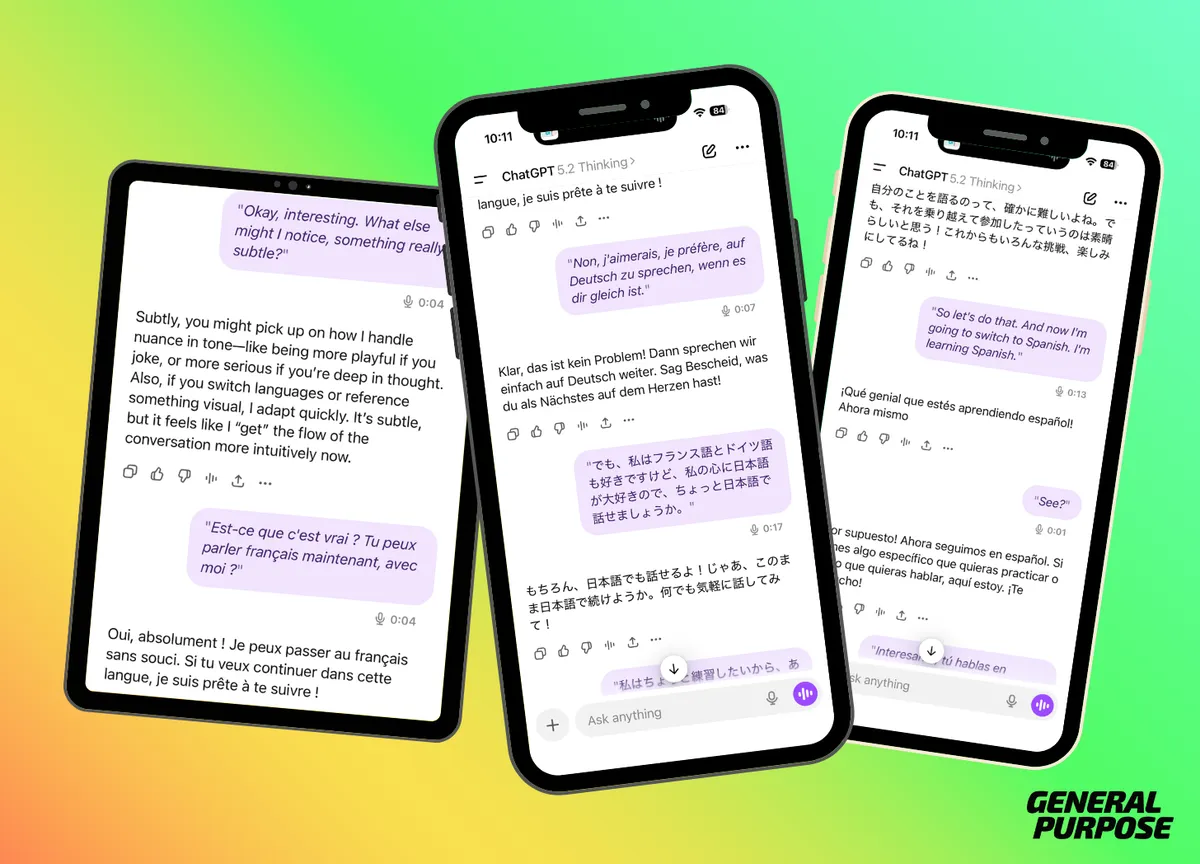
OpenAI's Advanced Voice Mode is now noticeably better.
The improvements are practical rather than cosmetic:
- faster responses
- more natural turn-taking
- better handling of tone and intonation
- smoother language switching
This matters because voice is still one of the most underused ways to work with AI.
In our training, we often teach a pattern we call "The Consultant": ask ChatGPT to interview you until it has enough information to complete a task properly. Voice makes that much easier.
For example:
- before a client call, ask it to question you on what success looks like
- before a presentation, ask it to play a sceptical audience
- when you feel overloaded, ask it to help you untangle priorities
Voice becomes especially useful when thinking matters more than typing. It is a good fit for planning, reflection, preparation, and getting from vague ideas to clearer structure.
Memory has improved, but it is not reliable enough yet
OpenAI has also continued improving memory. In theory, that should make ChatGPT better at carrying relevant context across conversations.
In practice, it is still uneven.
We have seen it improve, but not enough to trust implicitly. If a detail matters, you should still:
- save it explicitly as a memory
- keep it inside a Project
- or repeat it when accuracy matters
That is not a criticism so much as a usage note. Memory is useful, but it is not yet a substitute for deliberate context management.
New use cases matter more than generic enthusiasm
We also published more real use cases and case studies from our own training programmes.
The headline results are helpful:
- 8x to 20x first-year ROI
- 36 to 120 minutes saved per person per day
- up to £478,000 of annual productivity recovered for a single client
But the more important thing is what sits beneath those numbers.
The strongest use cases are specific. They are grounded in actual workflows. They show where AI is useful, who benefits, and what changes operationally. That is much more helpful than broad claims about "AI transformation".
Learning from the best is more useful than abstract strategy
We launched our Mastering AI with ~ conversation series because many of the best questions about adoption are easier to answer by looking at teams who are already doing it well.
The point of the series is simple:
- which use cases delivered ROI?
- which ones did not?
- how did leaders bring their teams along?
- what would they do differently now?
That kind of practical, unscripted detail is much more valuable than generic future-of-work commentary.
AI Skills Boost is a start, not a solution
January also brought renewed attention to AI upskilling through the UK government's AI Skills Boost programme.
Free access to training is good news. But access is not the main problem.
The bigger issue is support.
Many workers want to build AI skills but do not feel they have enough structure, relevance, or organisational backing to do it well. That gap matters most for younger workers and for people in roles that are already changing quickly.
Giving people free learning material is better than nothing. It is not the same as helping them develop durable capability in the context of their actual work.
The wider lesson
January's updates pointed in the same direction.
The tools are getting more usable. Voice is more practical. Memory is slowly improving. But organisations still get the biggest gains when they focus on:
- real workflows
- real use cases
- repeated practice
- examples that show what good looks like
That is what turns AI from an interesting tool into something operationally valuable.