Policy monitoring digest
Small teams cannot track every development. A scheduled digest pulls policy changes from official sources and ranks them by significance.

AI training for mission-driven organisations that need practical capability, not hype, often with tighter budgets and smaller teams.
Teams we've trained include

Each one was built in our sessions with clients like yours, and comes from our library of more than 1,000 AI use cases.
Small teams cannot track every development. A scheduled digest pulls policy changes from official sources and ranks them by significance.
Proposals get rejected on technicalities. Each one is checked against the funder's terms, clause by clause, before submission.
Proposals rarely get challenged before submission. A simulated panel of funders stress-tests each one and suggests how to strengthen it.
Briefings land badly when objections were not anticipated. Teams rehearse against a sceptical AI policymaker before publication.
Past positions are hard to find. A shared agent answers questions from your publications and consultation responses, separating internal from public views.
Mapping who funds what takes weeks. Interactive dashboards show funding flows by funder, geography and recipient.
The numbers your competitors are watching
Where charities, schools and government stand on AI, from the latest official and sector data.
Charities, regulators and sector bodies are moving AI out of the hands of a few keen individuals and into the whole workforce, with staff policies, tools for every colleague and hands-on pilots in real teams. Few of them have the budget to build their own programme, so we give your team the same footing in days, not years.
We can usually identify your highest-impact use cases in a single conversation.
Courses for non-profit, government & education teams
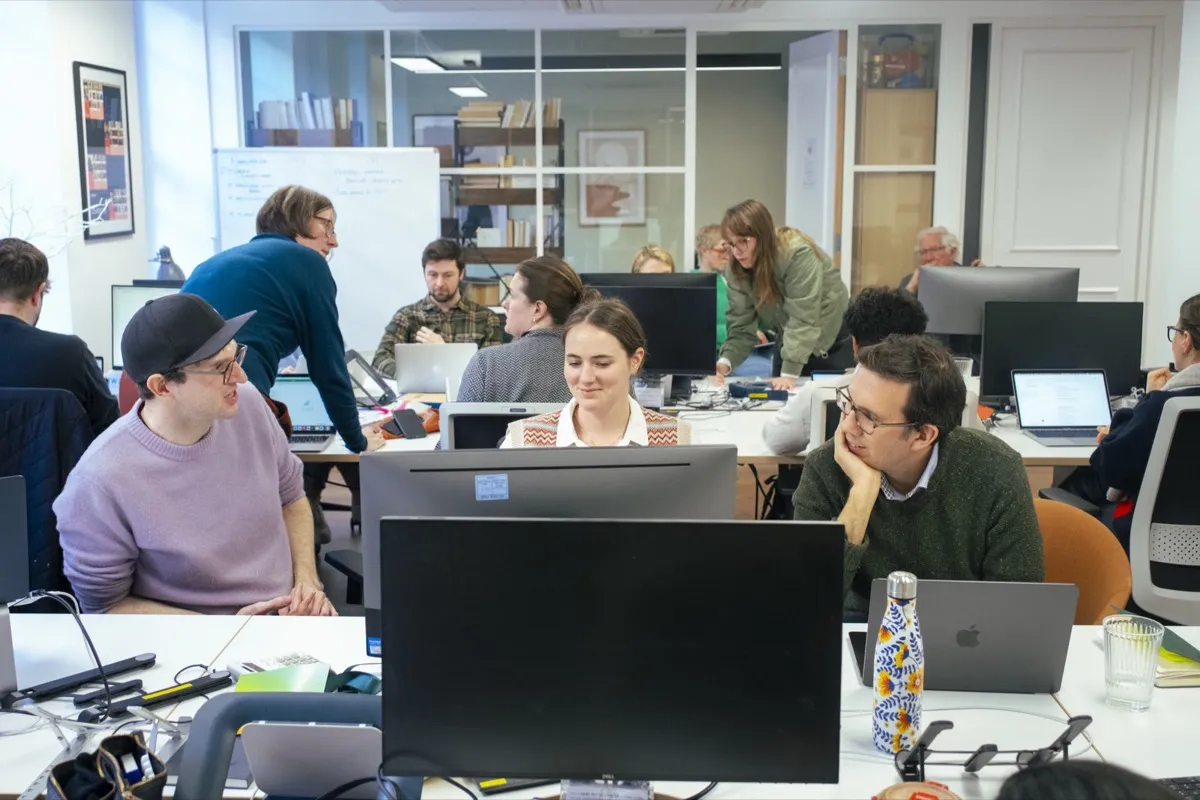

How we get your team there
Start where accuracy matters most: research, policy briefings, funding bids, and public communications. Organisations that tie AI to that work, rather than a general push to save time, build capability that stands up to scrutiny.
Teams adopt faster when training uses their actual reports, briefings, and bids, in the tool IT has already approved, which is often Copilot. Abstract demos generate interest. Working with live material changes behaviour.
Send a short checklist to whoever manages licences and permissions before the day, and agree what can go into the tool. Most organisations find that IT set-up and data rules, not model capability, are the real constraints.
A short survey before the session gives a baseline, the same questions afterwards show what changed, and anything set up to run on its own gets a named owner. The goal is a smaller set of workflows the team trusts enough to rely on.
“We went from dabbling to making AI core to the way that every single person in the organisation works.”
Leadership team, The Forward Institute
“An incredibly informative, educational and enjoyable course that helped me understand how AI can be utilised in several ways - and easily implemented to help me work smarter, not harder.”
Lewis Reynolds, Funding Associate at Thirty Percy Foundation
“Really loved the course. Super interesting and useful.”
Participant at a European climate policy charity
We can map the highest-value use cases for your team and design bespoke sessions around your actual documents and workflows.
Sources and further reading