





















Skip to content
Workflow Redesign AI training workshop

AI Agent Training and Workflow Redesign

Our programme for changing how your whole organisation works with AI. Team by team, people redesign their real workflows. Then they build, test and sign off the agents that run them.

10,000+ people trained across 500+ organisations

BT
Hilton
Three
Julius Bär
Quilter
Network Rail
Estee Lauder
WeWork
The AA
Bupa
London Business School
Kimberly-Clark
Frontier Economics
Candy Kittens
Amdocs
Young's Brewery
make.com
Dock & Bay
London & Partners
Montagu
BT
Hilton
Three
Julius Bär
Quilter
Network Rail
Estee Lauder
WeWork
The AA
Bupa
London Business School
Kimberly-Clark
Frontier Economics
Candy Kittens
Amdocs
Young's Brewery
make.com
Dock & Bay
London & Partners
Montagu

Redesign the work, not just the prompts

Everyone wants agents. Very few teams know which job to give one, how to tell whether it works, or how to get it past IT and risk. What we hear again and again: people want to build agents faster than IT will let them.

Workflow Redesign starts with the work, not the tool. We map a real workflow and decide where an agent helps and where a person stays in charge. Then we build the first version on whatever your firm already has: OpenAI’s Dots, ChatGPT workspace agents, Claude Managed Agents, or simply an agent in Claude Cowork. Governance runs through the whole session, so what people build can be switched on.

It’s a programme, not a one-off. We work through your organisation team by team. Each team redesigns its own workflows on the same shared rules for agents, so the whole firm changes how it works, not just a few keen people.

What people say after our classes

97%

said the class will help them get more value from AI at work

97%

enjoyed the class

88%

would recommend it to a colleague

5 hrs

average time each person expects to save every week

Post-class surveys across our classes.

What your team walks away knowing

We build every session from scratch around your work. The foundations stay the same.

01

What an agent is

Agents in plain English. We take real examples apart: their goal, trigger, actions, checks and the point where they stop.

02

Finding the right jobs

Interviewing each person about their work to build a long list of jobs an agent could do. Written as jobs to be done, not features.

03

What your systems allow

Checking each idea against the systems, connectors, data owners and approvals it would need. So nobody builds something that can never be switched on.

04

Choosing one job

Scoring the shortlist on impact, feasibility and risk, then picking one. And writing down what version one leaves out on purpose.

05

Mapping the workflow

Every step the agent takes, where a person has to approve something, and what “done” looks like.

06

Writing the tests first

Clear pass or fail checks, plus normal, awkward and unsafe test cases. All written before a single instruction.

07

Building and fixing

Writing the agent’s instructions on your platform and running a realistic case. Then fixing the root cause of each failure and testing again.

08

Governance and sign-off

A premortem on what could go wrong. Then a one-page approval memo: data, access, what happens if it misfires and who signs it off.

What they leave with

Everyone finishes with a two-minute show and tell. A working first version, proof that it passes its tests, and the memo IT and risk need to approve it.

Ready to redesign how your team works?

One conversation is usually enough to find where AI will help your team most.

Get in Touch

Built in our workshops

These agents came out of our workshops. Each runs on a schedule or a trigger, does a job people used to do by hand, and checks with a person before anything leaves the building.

Daily commitments and chasers agent

Reads yesterday’s email and chat each morning and lists promises not yet kept, requests people are waiting on and threads never followed up, with the message behind each one.

Social media monitoring with chat alerts

Checks social media every few hours for a covered company, filters out the noise against clear criteria and posts only material items to the right channel.

Weekly cash report from email threads

Reads the week’s cash reporting emails and drafts the consolidated cash report, flagging anything unusual and taking no action without review.

Competitor investment tracker

A weekly search for new investments, exits and fund raises across a list of competitor firms, returned as a table with any overlap with your own pipeline flagged.

Anonymised examples from real client workshops.

Why it matters now

Three numbers that show agents moving from demos into everyday work. Each links to its source.

40%

of enterprise apps will embed task-specific AI agents by the end of 2026, up from under 5% in 2025

Gartner

33%

of sampled Cowork sessions were business process and operations work

Anthropic

58%

of AI users say they now produce work they could not a year ago

Microsoft Work Trend Index

How we build it

We roll Workflow Redesign out team by team. Each session is shaped around the next workflow that team wants to change.

  1. 01

    Customisation Call

    A call to hear which workflows your team wants to change, which agent platforms you have and who needs to sign off.

  2. 02

    Building Tailored Exercises

    We prepare worked examples from your team’s real jobs and check which build route fits your setup.

  3. 03

    Workshop Delivery

    Choose the job, map the work, build the first version, test and improve it, then plan a safe launch.

  4. 04

    Review Call

    A call to see which agents went live, what got stuck and which workflow to take on next.

What’s included

Delivered in person at your offices, or remotely.

  • A customisation call and exercises built around your team’s real workflows
  • A hands-on session with an instructor and a dedicated tutor in the room
  • A first working agent per person or pair, with its test cases and results
  • A one-page governance memo for each agent, ready for IT and risk
  • A prompt library and cheat sheets
  • A follow-up review call

Going further

Rolling it out across the organisation

This is how organisations go from a few people using AI to every team working differently.

  • Team by team, each session takes on the next high-value workflow to change
  • Agents that passed their tests move from first version to live use, with owners and review dates
  • A shared register of agents, what they can access and who signs them off
  • Regular reviews of what is working, what has drifted and what to retire

Who it’s for

Teams asking about agents

People who keep hearing about agents and want to build one properly. Not watch another demo.

Operations, finance and admin

Teams with research, reporting, chasing and coordination work that follows the same steps every week.

IT, risk and compliance

The people who’ll be asked to approve agents, and want tests and sign-off built in from day one.

Leaders changing how work gets done

Heads of team who want AI to change the shape of a workflow, not just speed up one step of it.

Who teaches it

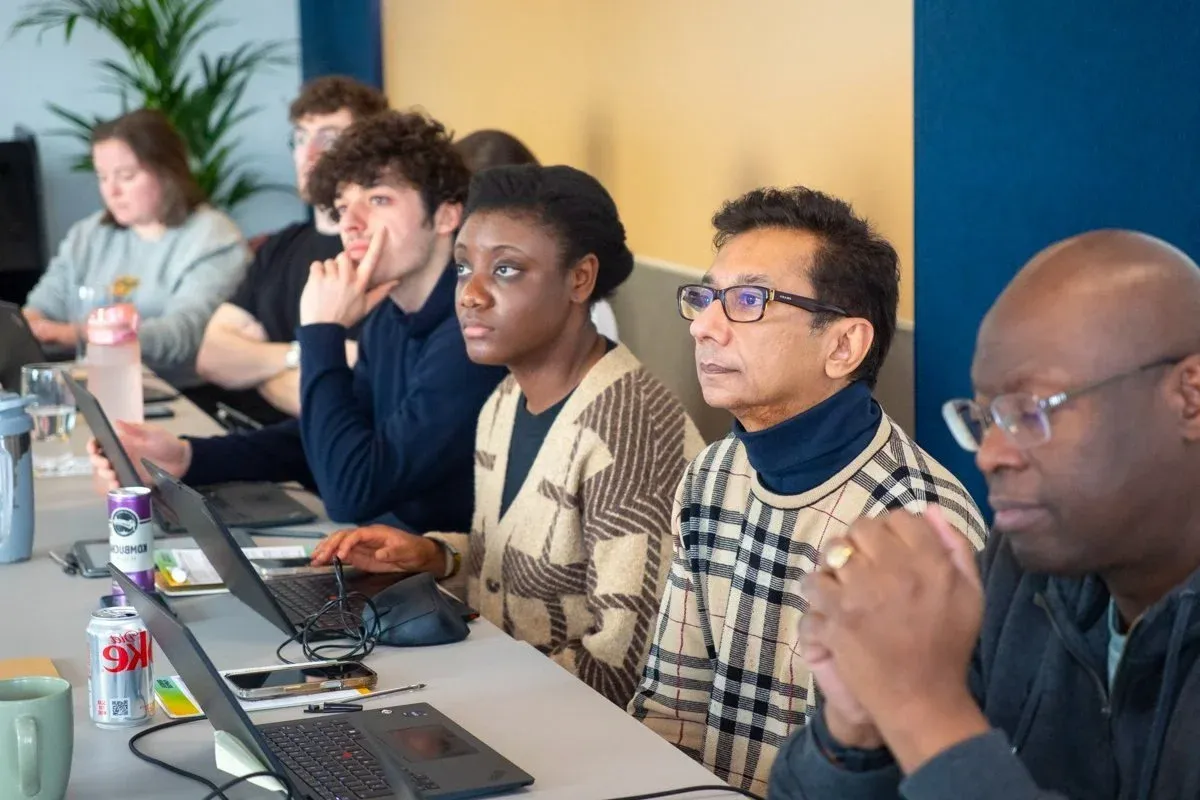
Every Workflow Redesign session is led by one of our instructors, with a dedicated tutor in the room so nobody gets left behind.

Tom Hewitson

Founder + Chief AI Officer

Susi Castle

AI Instructor

Meena Sangar

AI Instructor

Charlie Cadbury

AI Instructor

Gerhild Pirker

AI Instructor

Louis Whittal

AI Instructor

Cien Solon

AI Instructor

Aaron Jones

AI Instructor

Frequently asked questions

Which agent platform do you use?

Whichever your firm already has. We’ve run this on ChatGPT workspace agents and Claude Cowork, and the same approach works on OpenAI’s always-on Dots and Claude Managed Agents. The thinking, the tests and the governance don’t change.

Do we need technical skills to build an agent?

No. The hard part isn’t the technology. It’s choosing the right job, being clear about the steps and testing it properly. That’s what the session is about.

How do you stop agents doing something they should not?

Every agent is designed with human approval steps, a clear stopping point and tests that include unsafe cases. Each person also writes a one-page memo on data, access and what happens if it goes wrong. IT and risk review it before anything goes live.

Is this a one-off or a programme?

A programme. We work through your organisation team by team. Each session takes on the next workflow that team wants to change, and builds on the agents and governance from the last.

Is the training in person or remote?

In person at your offices by default, with an instructor and a dedicated tutor in the room. We can run it remotely if that suits you better.

Do you run Workflow Redesign training courses in London?

Yes. We are based in Covent Garden, London, and run most sessions in person at clients’ offices in London and across the UK. We also work with teams worldwide, from Paris and Berlin to New York and Singapore, and can run sessions remotely when that suits better.

See what this looks like for your team

Tell us which workflow your team most wants to change, and we’ll build a session around rebuilding it with AI.

Get in Touch